

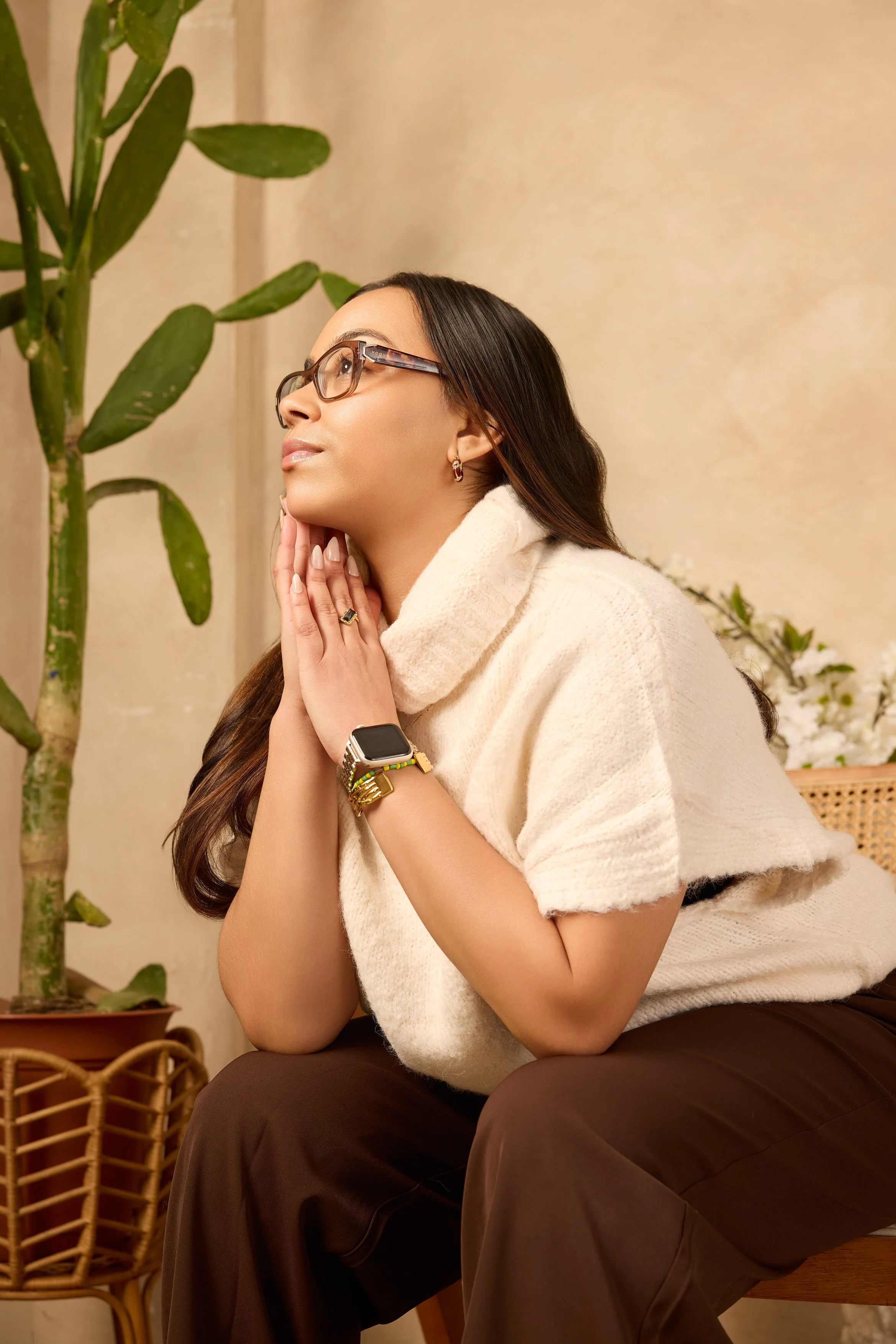
Our story
The truth is, so much of what we know has never come from a textbook.
Before there were institutions, there were communities. Stories shared around tables, wisdom carried through spaces of birth, skills passed from one generation to the next, and children learning who they were through the relationships that held them. Knowledge has always moved through relationship.
Over time, I've come to understand that every story shared, every question welcomed, every child encouraged to trust themselves, and every family supported through transition is part of how communities remember who they are.
My studies in anthropology and my dual master's in childhood education and students with disabilities gave language to patterns I’ve already been witnessing through lived experience. My training as a reiki master teacher and full-spectrum doula deepened that understanding by expanding how I think about healing, presence, and the ways care moves through families and communities. Together, these experiences continue to shape how I see learning, relationships, and the conditions that allow children and families to thrive.
Walking alongside families as they navigate education, healthcare, and other systems has only reinforced those beliefs. I've seen how fragmentation shapes the everyday experiences of children and families, and I've witnessed what becomes possible when people are met with dignity, cultural awareness, continuity, and trust.
I know what it feels like to be read quickly but misunderstood deeply. That lived experience reminds me to approach every family with curiosity before assumption, honoring the knowledge, instincts, and wisdom they already carry. My role isn't to have all the answers, but to walk alongside families with education, care, and support as they deepen trust in themselves and one another.
Birth work became a natural extension of everything I had already been learning because birth, childhood, education, healing, and community have never felt like separate conversations to me.
They are part of the same continuum.
Solful Truths was born from this understanding. It exists to strengthen relationships, preserve the wisdom that moves through community, and support families from birth through early development with care that feels whole, connected, and continuous. Here, education is an act of care, healing is relational, and every family is recognized as carrying wisdom worth honoring.